Add your promotional text...
What Is IVF (In Vitro Fertilization)? IVF Treatments
For many couples, the journey to parenthood is not a straight path. If you have been struggling to conceive naturally for more than a year, In Vitro Fertilization (IVF) offers a proven medical solution. At Wajia and Tania Medical and Infertility Centre, we specialize in turning hope into reality through advanced Assisted Reproductive Technology (ART).
A Quick Overview of IVF Treatment
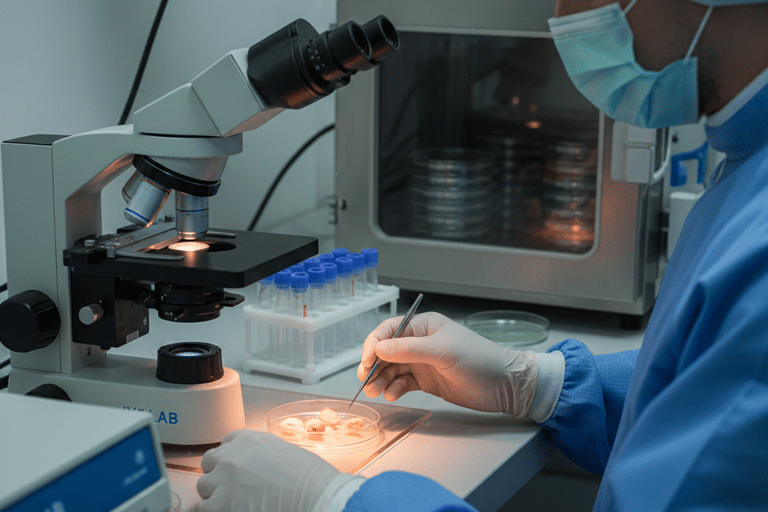
In-vitro Fertilization is a widely performed assisted reproductive technology (ART) among couples who can’t get pregnant naturally after one year of trying. The procedure works for both female and male-factor infertility. It may sound simple, but the entire procedure is pretty complex and can sometimes take 2-3 weeks or longer.IVF is a series of steps, starting with ovarian stimulation (getting your ovaries to release mature eggs) and ending with embryo implantation. Before you set any unrealistic expectations, know that IVF isn’t a suitable treatment option for every couple. Whether or not it works for you depends on your age and the cause of infertility.
Who Is IVF For?
IVF is a versatile treatment recommended for various fertility issues, including:
· Blocked Fallopian Tubes: Bypassing the tubes allows the egg and sperm to meet.
· Male Factor Infertility: Issues such as low sperm count or poor motility (often treated with ICSI).
· Ovulation Disorders: Conditions like PCOS (Polycystic Ovary Syndrome).7
· Endometriosis: When uterine tissue grows outside the uterus, affecting fertility.8
· Unexplained Infertility: When standard tests cannot pinpoint a specific cause.
Genetic Concerns: Couples can use PGT (Preimplantation Genetic Testing) to screen embryos for hereditary diseases


IVF Benefits and Risks
While IVF is a beacon of hope for couples unable to get pregnant after trying all non-invasive procedures, it doesn’t come without its share of risks. It’s best to weigh the risks and benefits of this ART procedure before going for it.
Benefits
Works for Male-Factor Infertility: In addition to female-related infertility issues, IVF has proven successful for couples with male-factor infertility. Procedures like ICSI and testicular aspiration can help with sperm extraction and fertilization.
Improved Odds of Conception: If all non-invasive treatments have proven ineffective in your case, IVF can help you achieve your parenthood dream.
Advanced Screening: IVF eliminates the risk of passing genetic diseases, like cystic fibrosis, or chromosomal abnormalities to your babies through advanced medical procedures like preimplantation genetic diagnosis.
Egg Preservation: Couples can opt for egg or embryo freezing. This minimizes the risk of age-related fertility issues in couples who want to have babies in their 40s.
Risk
Multiple Pregnancy: In IVF, multiple embryos are transferred to the woman’s uterus to maximize the chance of one of them implanting successfully. This can lead to multiple embryos getting implanted, increasing the risk of premature delivery, low-birth-weight babies, and c-section birth.
OHSS: Hormone shots can cause Ovarian Hyperstimulation Syndrome (OHSS)
Miscarriage: IVF carries the same risk of miscarriage as a person getting pregnant naturally. It’s 15% for women in their 20s and 50% for people above 40.
The IVF Process: Step-by-Step
Our IVF specialists follow international protocols to maximize your chances of success. A typical IVF cycle takes about 3 to 4 weeks.
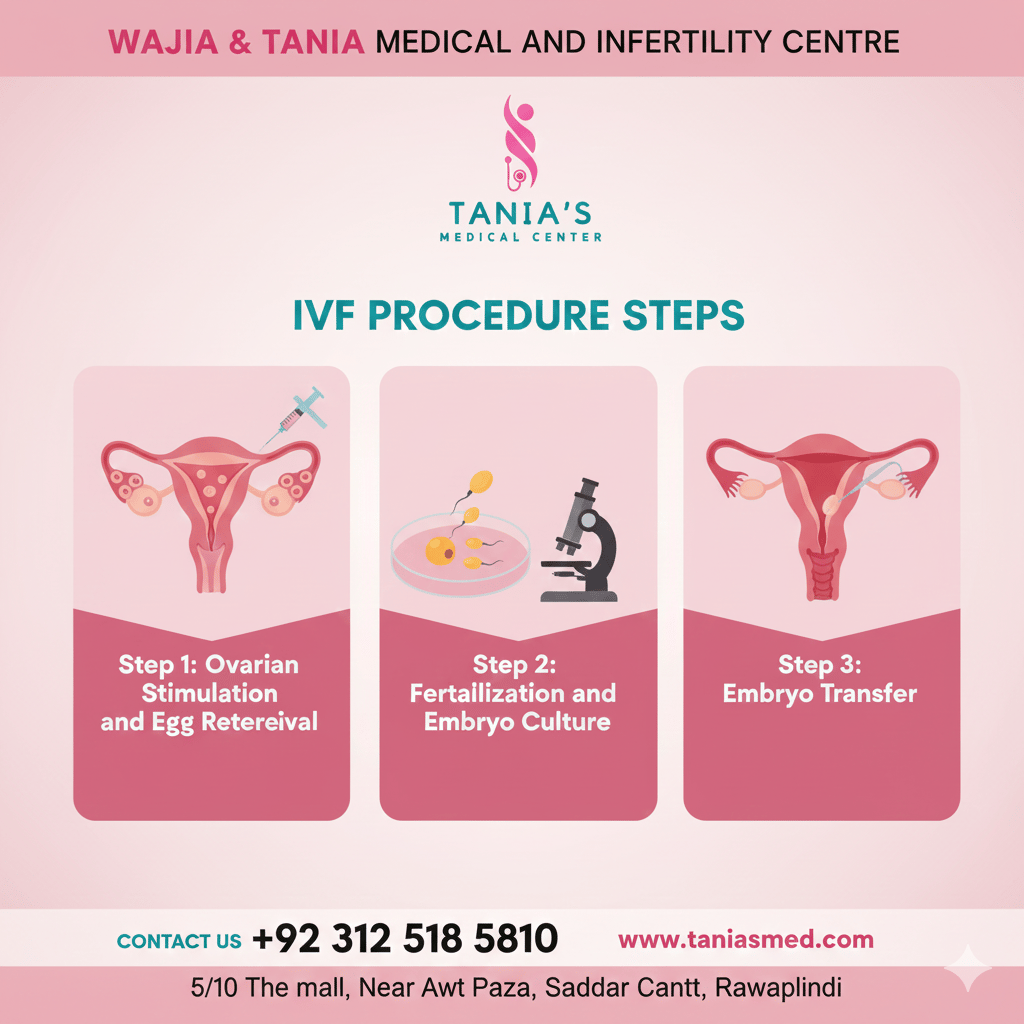
Step 1: Ovarian Stimulation
In a natural cycle, only one egg matures. To increase success rates, we administer fertility injections (gonadotropins) for 10–12 days to stimulate your ovaries to produce multiple mature eggs.You will be monitored closely via transvaginal ultrasounds and blood tests.
Step 2: Egg Retrieval (OPU)
Once the follicles reach the optimal size, a "trigger shot" is given to mature the eggs. About 36 hours later, we perform the Egg Retrieval.
· The Procedure: Under light sedation (pain-free), a thin needle uses gentle suction to collect eggs from the ovaries.The process takes 15–20 minutes.
Step 3: Sperm Preparation & Fertilization
On the same day, a sperm sample is collected and "washed" to select the healthiest sperm.
· Standard IVF: Sperm and eggs are mixed in a dish to fertilize naturally.
· ICSI (Intracytoplasmic Sperm Injection): For male infertility, a single healthy sperm is injected directly into each egg to ensure fertilization.
Step 4: Embryo Culture
The fertilized eggs (embryos) grow in our state-of-the-art laboratory for 3 to 5 days. Our embryologists select the strongest embryos, often aiming for the blastocyst stage (Day 5) for higher implantation potential.
Step 5: Embryo Transfer
This is the final step. The best-quality embryo is transferred into the womb using a thin catheter. This procedure requires no anesthesia and feels similar to a Pap smear.
· Note: Remaining high-quality embryos can be preserved via cryopreservation (freezing) for future attempts.
Step 6: Pregnancy Test
About 12–14 days after transfer, a Beta hCG blood test confirms if the embryo has implanted successfully.
FAQs
What is IVF?
IVF is a fertility treatment where eggs are fertilized outside the body.
How successful is IVF?
Our doctors achieve some of the highest IVF success rates in Pakistan.
Who can undergo IVF treatment?
Couples facing infertility issues or certain medical conditions can benefit from IVF.
Is IVF painful?
Most patients experience mild discomfort, managed with care.
How long does IVF take?
A typical IVF cycle lasts about four to six weeks.
What should I expect during consultation?
Our doctors review your medical history and discuss personalized treatment options.